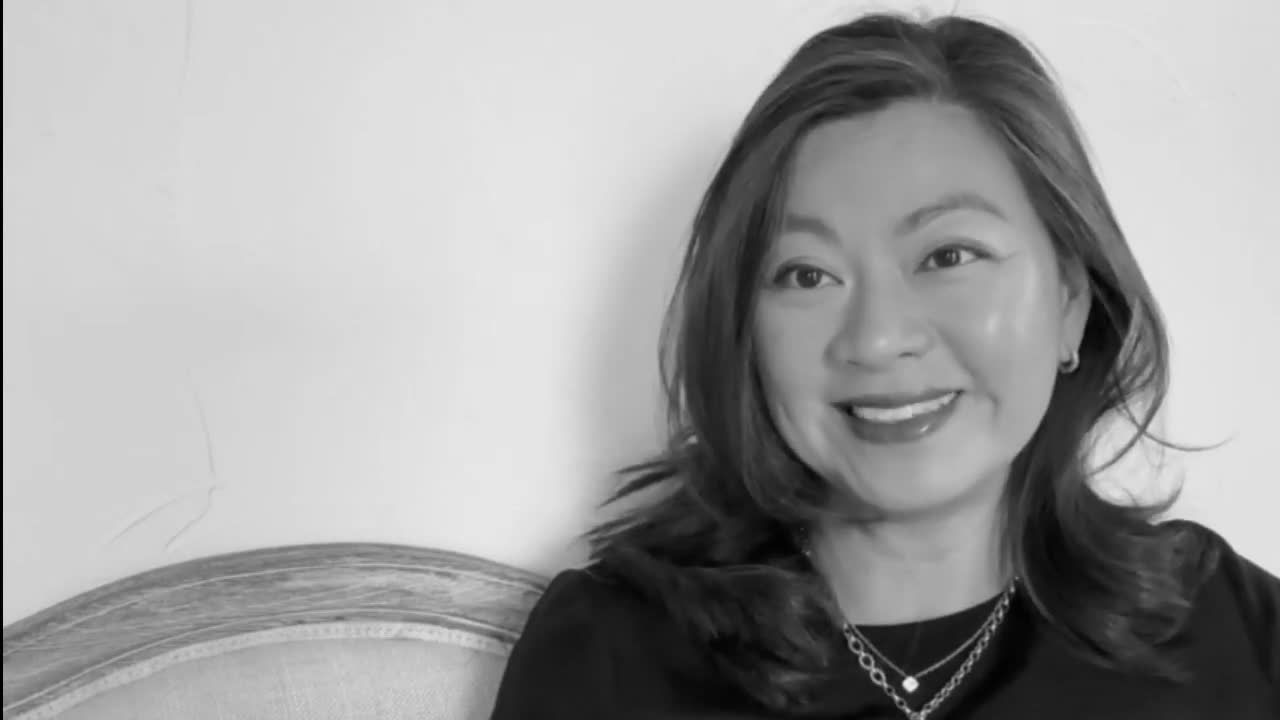
Gayle Karen Young Whyte
Minding the invisible
Full edit · 38:57
Spoken in English. Their words, as they said them.
It's funny in the moment of meditation, there's this moment where the soundscape for me just opens so wide, and all of the sounds that are normally at the edges of my awareness start entering in. So it's really lovely, the sort of sense of the widening of of attention.
I think that's a little bit of what I'm struggling with at the moment is the shaping of my own attention and how keenly aware I am of what a universal issue that is for us in a time of polycrisis, in a time of technology and news and cycles and what I would call misaligned incentives for the grab of our attention and how much that's at work and at play in my own life in ways that I feel just really challenged by at the moment.
My old teachers said nothing happens without your attention, and I'm just very mindful of that old saying and my own curiosity around it. There are sayings like that that teachers have gifted me with that I find myself deeply curious about, and I often just end up wondering if they're true. Is it true that nothing happens without your attention? Is it true, as another teacher said, that beauty and fear can't exist in the same place? Like, there's something intuitively that feels true about it, but I find myself kind of turning it over and over and testing if that is true. What I can say is I feel the fragmentation of my attention in my days and in my life, and I wonder if that's a consequence of having designed this much of a mosaic of a life.
I think like so many koans, it's a partial truth, yeah, that so much happens without her attention.
And that's a bit of the grief in it as well.
It's that funny paradox of simultaneously diffusing your attention to be able to hear it, to welcome it in, to let it in, and at the same time, to find the you that is paying that kind of attention in the midst of that.
So we and I live in this time of incredibly fragmented attention.
I like Mary Oliver's line that she has at the end of one of her poems that attention is the beginning of devotion.
I think that's what grieves me about having my attention so fragmented at the moment is that it feels like my devotion is also scattered.
I was reflecting with an old friend of mine about being at the very, very first Singularity Summit on artificial intelligence that was hosted in Silicon Valley in 2006.
2006 was the very, very first Singularity Summit. And I helped host it. I was asked to lend some of my facilitation skills to the endeavor, and I was interested in the topic. So one of the things that I was paying attention to recently is how fascinating it is for me that AI has come out of Silicon Valley, and Silicon Valley is this fascinating confluence of these forces that I thought I was uniquely at the behest of and then realized at some point, mainly because I was listening to an Ezra Klein article podcast about Silicon Valley, just how trite in some ways this whole thing is. So the super funny piece of it is that Silicon Valley is this wash of a very California free to be me state. It's a wash of San Francisco hippie dom, Burning Man ethics, art, hate Ashbury expression, and this geeky science fiction futurist. We're out to save a humanity. I'm not even sure that we even like that much sometimes and that we're somewhat disconnected from. I noticed I say we as though I were still part of Silicon Valley, which I suppose I am influenced by Zen, by Green Gulch, by Tessahara, by Spirit Rock all being placed in that vicinity and UC Berkeley and Berkeley in general with all the psychedelics. And so there are so many ways in which I thought it was the unique expression of these or these influences were so a part of my life only to realize how widespread and almost stereotypical and funny it is that there are so many of us that have spawned this weird attention to a futurist edge that what I miss about it in the nineties and February was the sheer optimism of it. We thought technology would bring democracy to China in flying cars, and I was anticipating more spaceships to the moon and knowledge for humanity. And we did get a little bit of that. I mean, the mission statement of Wikipedia, when I was the chief people officer is to make the sum total of human knowledge free and available for anyone from anywhere. And I loved that mission statement. I did. I still love that mission statement. But the funniness of having this massively disruptive set of technologies. Whether it's AI or even social media. The disbursement to a scale that has been previously unscalable. It's a really interesting set of unintended consequences. And for me, those unintended consequences and how that relates to the shaping of our attention and devotion is a really interesting thing because I don't think you can extricate AI from devotion. If you think about where Pinocchio and golems and Hebrew mysticism and the quest for artificial intelligence and where that shows up in the social fabric of and the mythic fabric of Silicon Valley. I think it's a really interesting set of questions. And even in 2006, There was this interesting quest for what is human and what is worthy of our attention and what is beyond human in the midst of that undertaking. So at the time, I was interviewing various nascent leaders in AI space who are already dreaming of a future in which this would come to pass. And I jokingly would refer to it as robo Jesus because people would say things to me like, oh, you know, it'll do so so much good for humanity. It will save humanity. It will give us someone to talk to which frankly terrified me because it's like, don't you have friends? But I thought that was really interesting that we were looking for something and we're always looking for something to draw focus, to alleviate this existential aloneness that I think is part of being human in this universe. And whether we quest for it in spirituality or whether we find it in being able to project personality and attention and care on anthropomorphize Chat GPT six seven eight nine ten is a really interesting conundrum to me. And I think it's an ancient quest that has taken a really new and fascinating form.
And it's something that has our attention. Right? And I think it's something that should have our attention. But what is it to pay attention appropriately in a meme space that is so cluttered with It's just so rife with all of our projections on what we want it to be and what would it could be and I don't know. It's going to say I don't know of anything else right now that is such a projection screen for all our human longings, wants, and fears. At such a greater which I think that's not true is that I think our political selection process here in The United States and I think that our responses to COVID and I think that our responses to pretty much everything, you know, that part whole piece of integral life where you see the whole refracted into a million pieces and you can get the essences of things and tiny other things is true. But certainly, in the AI space and the conversation about existential threat or or salvation is an is a really interesting one to me.
Mainly from a mythic perspective because I think the projection onto it is asking this question again and again about what's worthy of our attention.
And it's certainly a question I'm asking of myself at the moment. What's worthy of my attention? Where is it? What am I creating or crafting or speaking to or devoting myself to it that is worthy?
And then another voice comes in and says, does anything need to be worthy? Like, is there anything more worthy of attention sometimes than really simple things? Think about that when I woke up with my puppies this morning, and my one little puppy who is just rolling over as she hears me say puppy, rolled over into my lap and waved her paws in the air. And I was looking into her eyes and experienced being the recipient of utter devotion. And I thought about that mutuality in between us in that moment and just how. You know, forget all the wonders of the Internet and technology as much as that captures me sometimes and evokes my curiosity and lifts my sense of potential. But that sensibility of devotion between us this morning was just so exquisite.
So I've been trying to work on this manuscript for years now, and it feels like my dissertation, something I've never done. And I'm starting to both lose faith that I'll get it done and also examining why that is. And I think part of it has to do with that split of attention. And I think another part of it is that now that it has my attention again, I'm wondering what resources I can bring to bear because as I know well from spending time as an executive coach and as a leader that we all need a little help with things, especially things that that that are hard for us. But there's something about the topic itself that keeps sliding out of my attention. So this piece of writing is what I've been loosely calling minding the invisible, and it was born out of the sense that we who are culture workers are meant to live in that liminal space between the mythic and the mundane, between the seen and the unseen, and to navigate that and to support other people in navigating that well. I think part of what's challenging about writing this piece is that in order to talk about minding the invisible, you have to surface the invisible, which by its nature is not visible, which is incredibly frustrating because I have this sense constantly that I'm pointing to things that are not entirely meant to be pointed at.
I think of it as the dark matter of the universe. It's not something that can be seen directly or measured or quantified. And we live in a world, as Rebecca Solnit calls it, ruled by the tyranny of the quantifiable. This attention that we have towards metrics and understanding the concrete gross shape of reality because that's what's most immediately accessible to us, while the whole discipline of spiritual practice, energy practice has been attuning to the invisible, which always, I think, risks, especially in the corporate world that is my normal clientele, risks you see being seen as a bit of a crackpot. And certainly, I've held that judgment at times myself. I went to my first workshop with my energy teacher in Berkeley. It was hilarious because I showed up there. And do you know what happens when you have an energy workshop in Berkeley? It's like you get the most interesting people showing up. And I just found myself showing up there with all my judgment and all my defensive routines and all my distancing moves. So to say, I am not like these people. You know? I don't believe that we should have tinfoil on our heads to protect us from five g, and and it was just really interesting the ways that I found in myself, the sense of judgment about those who are attempting to pay attention to the less visible, which I think is part of our nature as human beings.
I think this is again why AI is interesting. I think this is why the various spiritual traditions are interesting. I mean, at the very least, God is a very, very big invisible friend. Right? So we've always had this attention and fascination with the invisible. And because our fascination with it lives so much in shadow in our psyche, I think we, and then me specifically, as I have trouble writing this work, just isn't very good at it yet.
So I think of this work as an invitation to just consider not so much what the invisible actually is, but what it takes from a personal first person perspective to attend to it.
I find myself having pretty strong beliefs about what it takes. Like, one of those beliefs is that you have to be resource yourself to drink from a deeper well, to have some practice of that in your daily life. Because otherwise, the fragmentation of attention is going to keep you just in your fight or flight reacting to all of the things that are coming down the pipeline, and it's not gonna get better. That what we get living in an age of poly crisis with climate change, changes to supply chain, changes in the geopolitical structure, changes in the social structure, reckoning for justice, layered on top of the incredible, tumultuous generational shifts happening in the personal lives of people, that we don't get to expect stability as though it were ever there. But instead, we have to constantly pay a deeper attention to how we reorient to that mess outside. So the need to drink from a deeper well. For me, the need to read poetry, to listen differently, to look into the eyes of my dog, to read science fiction, to be in deep connection and community.
Those are the practices which I think are inherent to being able to navigate what is less visible.
And then need to work with the embodied practice of the paradox of needing to be embodied to mind the invisible. This sense of being able to use your senses of sight and hearing and breath and touch to know what your own boundaries are, to know what's you and not you. To decide to be here on this planet, in this body with each footfall that you take. That's part of the deep practice of minding the invisible.
To pay attention to what I call the mythic and the mundane. The sensibility of knowing that those two things are deeply entwined. And that because we as human beings are sense making creatures, we need the mythic frames to give us an overarching structure for our attention. And then beneath that, to realize that we as human beings are terribly bad at aligning our own motivations, beings, incentives, systems to what we actually want in the world. And that only by working in the mythic and the mundane together do you get that integrity. Otherwise, we just live through the incredible dissonances and the wasted energy and the and the organizational thrash and the personal chaos and the unintended hypocrisies of what it means to kind of speak through both sides of your mouth when those two things aren't aligned.
I call working the mythic and the mundane seeing the hidden symmetries of things, which is an invitation, as Rokey said, to live in widening circles, to see the ways that things fit together and to take a systems view.
I think one of the things I like about myself and also feel deeply challenged by in the way that those two things are deeply nested together is that the scope of my attention crosses a lot of territory. And the very fact that the scope of my attention crosses a lot of territory drives me absolutely bonkers. And I think that that's what first opened me to this idea of the mythic and the mundane, because I remember reading Viktor Frankl's work. I flunked out of college and was living home with my parents, which is not a fun conversation to have with one's very academically motivated Chinese parents. Hey, by the way, I have flighted out of college and now I need to move home with you to our small village in Central California and I was lucky in that I found myself in a bookstore wanting to know what this experience was.
And bookstores have always been my happy place. You know, my parents used to drop me off at the library or the bookstore after school.
And I would go there to make sense of things and also to read science fiction and fantasy and trashy romance novels and all of these windows into the imagination that I think that books offered me. And I remember finding Viktor Frankl's work around meaning the whole idea that between stimulus and response is a space and in that space lies our freedom. So he was talking about the things that give a life meaning. And I thought this guy can come up with his philosophy from the midst of a concentration camp. I can make some attempt to see and understand the world around me. So I think that's where that gift set got born.
Apparently, my soul likes other people's poetry. So I had the roomy lines surface. You know, the doorway between worlds is round and open. Don't go back to sleep. You must ask for what you want. Don't go back to sleep. He's got such a a lovely way of inviting, And I think that that's what and my husband talks about this as well, like, what does it mean to be an invitational being? What does it mean to be an invitational spirit? This idea that we are all invitations to one another, whether we want to be or not, and really, what kind of invitation are you making? And so this work of minding the invisible is a invitation to pay attention in a different kind of way, but it's not an intellectual attending to. You know, it's a wholehearted one that there's something about letting the heart break again and again and be still whole in the midst of all of that.
So I use these words, I think, as a constellation of the very similar things, soul, being, heart, animus. They all feel like part and parcel of the of a shared tapestry by which we make sense.
I suppose it's not an accident that my field of study in psychology with Suzanne Cook Reuter and Bina Sharma and Bill Torbert and Jennifer Garvey Berger and Robert Keegan has been ego development, the study of this faculty that we have of making sense of things, of paying attention, and how that I love Suzanne's articulation that you have to become somebody to become nobody, you know, so this this arc through of finding oneself and then moving beyond it to this much more porous, interconnected, interwoven. My friend Dan Siegel calls it mooi, me and we, the mooi space, which I find a funny a funny terminology for it. But he talks about it from the perspective of neuroscience. You know, you have Thich Nhat Hanh, which who talks to it as interbeing, but this this much more porous, malleable, interconnected way to understand oneself in order to attend differently to what's around us.
So you have to see yourself a bit differently to understand your connection to other things. Right? I find it really interesting to see how much the scale of trauma necessitates us finding really different ways to work with the full somatic experience and to diversify. Morrison Shire has that great poem about asking the world where it hurts, and there's an image somewhere in there about spinning a globe, and the globe says everywhere, everywhere. And so interesting, that polarity between individual healing and collective healing and how much one is necessarily linked to the other. So if you can't find individual healing in the self to look for it in the collective and that the collective is also predicated on working with individuals to be more whole and the deep relationship between those two things. I think America has over identified because of its individualistic sensibility as a culture on the well-being of individuals. If you sleep enough, if you eat well enough, if you do keto diets versus bulletproof versus vegan, you know, you will figure out your personal way to happiness with all of the technology behind biohacking that we could possibly offer you. And yet it neglects if our communities and our societies aren't well, that we are profoundly unwell. So it's a Krishnamurti quote about how to be profoundly well attuned to a sick society is no form of health. And I think a lot about that. And that goes also to the minding the invisible about what it means to be in the soma, to be in the body, and then to realize that our well-being is deeply interconnected to the society in which we live. And if we don't live in a just society, what does that do to our psyche? What does that do do to our sense of well-being? But unless those systems are designed with particular attention, I think that the unintended consequences of it can be pretty severe. And watch for a while people try to describe their organizational systems as families. Like, oh, that's that's messed up because and for a whole bunch of reasons. But when you start talking about organization, it's like, oh, we're like a family. Like, you can't fire your family. You can try to, but the family has a much higher tolerance for really dysfunctional behavior than you really wanna see in your organizational or societal settings. Do you understand? The language that we use with which to speak, the metaphors that we engage, and this is going back to the whole mythic and mundane piece, the mythos that we weave at the cultural and organizational and systemic levels really matters if you're going to try to create something that's truly generative and not extractive.
There's something about it that's a choice to be visible in a certain way. Right? You know, it is a choice for a certain visibility in a way that you haven't been visible before. So I think there's a whole scope and realm of things that I'm known for and that gets reflected back to me. And then this there's a piece of this that is a choice to be known in a different way by allowing something that is a deep creative endeavor of mine to arise and be shared and then disseminated in a way that's not mine anymore. And so there's an element to that that lives in the relational space of of what does this look like for me as a woman, as a as a woman of color. It's a curiosity for me about what that will look like. And I think that when you work on something, it transforms you. Right. This is one of the principles of minding the invisible. If you engage in something with a real expectation of transformation, there has to be a fundamental reciprocity in that and that if you are working on transforming something else, you will also be changed by it. And the metaphor that I was using from a very Silicon Valley lens is the very act of writing source code. Your own source code is being rewritten as a consequence of it. This goes back to the idea of of what permeable beings we are. And so this endeavor, I I expect, you know, will change me. It certainly teaches me. Like, even having language around the mythic and mundane, I certainly see it everywhere now. Right? That's that's the gift of the the the fundamental movement of ego development, the whole subject object theory, the being able to make something object.
From one of my favorite musicals, Sunday in the Park with George, there is a gorgeous piece in called Finishing the Hat. It's about the act of creation and what it requires from the actor. I find myself I'm stuck on this hat, like, wondering for myself, what's the hat? And then I find myself wondering how I can be an invitation for other people to make their hats because there is the whole idea. The creative endeavor of finishing a hat and making a hat where there wasn't one before. Right? Like, it evokes the magician, the archetype of the magician. And what illusionists are is they're masters of attention. And so it draws me back into this play between the mythic and the mundane, the invisible and the visible, and something about the magical nature of it and the wonder of it and the awe. And I believe very much in the capacity for awe that the minding the of the invisible takes. You know, there's a great line from a poem by Jack Gilbert, and the poem is called A Brief for the Defense. And the last line of it goes something like, you must risk delight. To make injustice, the only measure of your attention is to praise the devil. And I think about that as a necessary element, this risking delight. So if there was a question that comes up, it's like, what is scintillating about the hat? What is joyous about making the hat from nothing? Like, what is redemptive about it? There's a an old myth that talks about human beings as being the weight makeweights. And a makeweight is a thing that you would use to make two things on a scale balanced. And so in the fight between good and evil or just and just, the tipping point fundamentally is our attention, which is simultaneously unquantifiable and unmeasurable and a little terrifying given the ongoing forces to fragment it. So if the tipping point for I won't say humanity because I think it's beyond humanity. We have so much impact on the systems around us, the animal life, the bird life, the decimation of bees and birds. But if human attention is the make weight, then how do we shape that in the direction of joy and wonder? Because we can't we don't get to equalize all the grief. You know, if you if you just like, I don't think they even live on the same plane. I don't think you can have a bunch of grief of which seems just like an unending river if you really tap into it, and then have joy be an equal stream and that those two things are supposed to cancel each other out. I just don't think that's viable. It's not an accurate model. I think a more beautifully tenuous understanding is that the grief is there and that joy like a feather is there also and that you can't measure its transformative power. It's not meant to be exactly equal. It's the way that a feather drifting down can change an entire landscape just with a breath. So this co creation of making a hat and and a rhymeinder that's never a solo endeavor. It's never ever is. So all that to say, I'm curious about the role of wonder in making a hat.
It's a lovely number to end on.