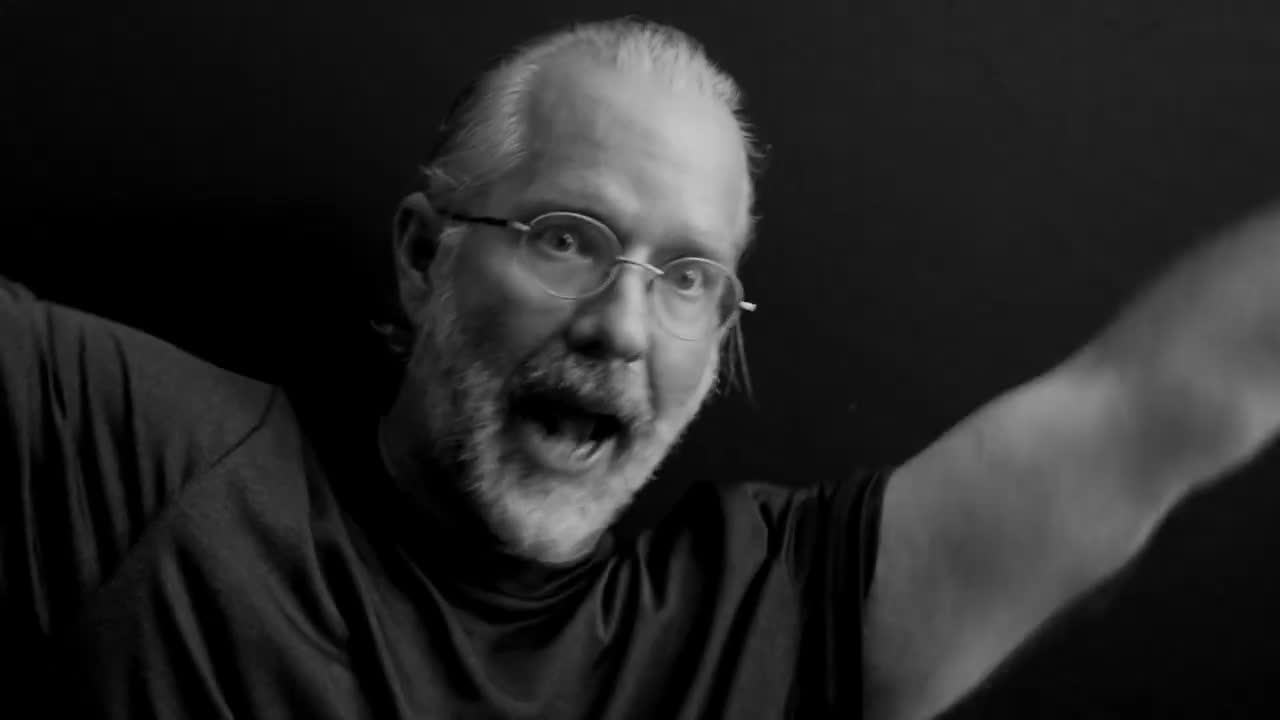
Gregg Henriques
Connecting soul to the system
Spoken in English. Their words, as they said them.
What's happened is that we built these institute modern and modern modernist institutional regulatory mechanisms of capital c culture, those are your beliefs and values, regulating the institutional powers and structures in a decent way from, whatever, 1600. Now there's obviously all sorts of problems, but there's a reason it exploded. And you go to America in the nineteen fifties, and I was like, okay. You know, after World War two, that was scary as shit, but we're in pretty good shape. Now you can look, okay, but but now something different is happening. Okay? Something different is happening. Modernity, and with a postmodern critique into the digital, into the environmental crisis, is obviously wobbling enormously. That's okay. So, what does that mean if we look at what happens to civilization collapse is that the old institutions start ineffectively behaving. They don't know how to engage in effective work effort to regulate the complex adaptive systems. The old complicated network systems, and I mean that instead of complex adaptive systems, the complicated systems get outstripped and are unavailable to adjust and evolve to the task, especially when we get into some dramatic shift like the digital, coupled to globalization and environmental degradation, which is going to reduce resources and create massive fluctuations around an institutional organization that is not up to the task of all the new both affordances and problems. That's created an enormous amount of chaos inside the system. The chaos inside the system then potentially leads to breakdown, which then freaks the shit out of people. When you get people freaked out, they're going to look to the lowest common denominator to look for individuals that can have solutions, which then drop to the base of humanity and then say we're going to totalitarian control. And so as the system wobbles, you get this split of criticality, which we are facing, where everything starts to wobble and there's a split between chaos, it's all going to break down. The natural response to breakdown is as it breaks down, we got to get control. That translates into totalitarian control. Part of the fifth joint point problem from a complex adaptive system that we place is that we are between chaos and totalitarian control. And we need what some people in this space call a third attractor, okay, which is actually the wise place of, or for our ancestors. Okay? And it's not some utopian, but it's like, Hey, can we develop a sustainable place that enables human flourishing on a planet that's doing okay?
And the fact of the matter is though that we're seeing multiple systemic wobble and that's what makes, if you want my pessimistic fear at night, oh my God, I have three kids. 2050, are we even getting there? And I'll tell you, how do I make sense of that? There's a five percent chance that we're going down. So, well, that was ninety five percent chance. That's great. Of course, if you are on a plane, a thirty year plane ride, and somebody told you there's a five percent chance it's going down, as you buckle your seat belt, you're not feeling relaxed. Alright? And I see so much beauty in the world. So for myself, the issue is, yeah, I think there's a global theme. The institutions, political, basic infrastructure, human relation, built complicated systems that have now completely getting outstripped for a rather complex adaptive process. They're also pulling resources in an ineffectual way, diminishing rate of return in some key areas. Of course, technology tries to adjust for that, and we'll see. I think we're in the midst of a global shift. And how and this is why something like this is so important. It's actually we need important seers, and ultimately, they need to get the ear of important power brokers that actually have governmental and economic genuine influence. And the question is, can we wake enough of those people up and manage the psychopaths that are in those structures and the old infrastructure in time to create some sort of conscious evolution that orients the incentive structure toward that back half of the twenty first century that allows our ancestors to flourish.
The map that I'm affording fills in a problem that we couldn't solve before. We're in the midst of a hurricane in a biplane. It's good to get the goddamn structure right. It's a shitty map we had. I've got a much better one. When we do that, you actually look at a whole bunch of different things. Your damn reductive material mechanical view is wrong. It's just wrong. And it leads to conclusions in our human justification system that are completely like mind viruses. They're just misguided. If we collectively come together and love the planet and love one another, mattering, and I use that in a multiplicity of different terms, will change. What matters, how matters, and how matter manifests, including the living mental matter, cultural matter that we are. Okay? So what the fifth joint point fundamentally is about from at least a U Talk perspective, the thread that I can offer, is I could say I can tell you about humans. Okay? And I can tell you about human knowledge, science knowledge. And I can tell you about how the subject of human versus science affords us a holistic perspective that actually enables us to translate wisdom traditions into a collective whole. From there, we can then start to make an operating system that guides us towards valued states of being. That's what my proposal is, and that's what I know about. What's gonna happen in the AI world? Don't know. But I can tell you this. The mechanical system behavioral mechanical system said, hey. What we cared about is influence. I wanted to push something out of consequence and if the consequence and then we could create money, and then we could create money to create reinforcement schedules. And that's true. And the entire AI world now is actually trying to track your attention system and see how that works and create algorithms to manipulate you based on influence, which is true. Turns out from a Utah perspective, for very good reasons, we care about influence as social influence, the capacity to influence others with accordance with our interests. But we also care about a thing called relational value. That's being seen, known, and valued for who you are by important others. In the reductive mechanical framework what the fuck is that? In the Utah framework oh, I know exactly what that is. And, of course, I encourage you audience members, whatever, just ask yourself. Do you know what it's like to be seen, known, and valued, and you care about that, about important others? And, of course, virtually everyone, few psychopaths may be excluded. Virtually everyone's like, oh my god. I know what that is. Okay? We should be building systems that afford not just mechanical instrumental influence economically, but being seen, known, and valued. Okay? We should feed the human soul because actually the design of the human soul is to check both influence, mechanical influence, and reference that against it being seen, known, and valued. So, we need a grammar that speaks to the human heart. That's what I'm about. And to the extent then I can we can upgrade an operating system that actually gets our value, the problem of value, much more aligned with the world we actually find ourselves in, the nature, the relational, and then guide the tech toward valued states of being that are appropriately anchored to an operating system that clarifies what value is to begin with, which we have failed to do because of the enlightening plan. So, I don't know about all the technology, but all I can tell you is we're operating off of a crappy map flying into a hurricane. So what I can tell you, let's get a better map. Let's get clear about our values. And when we actually ask what this says our value should be, check your heart. My general answer is, hey, it's a lot more congruent with our subjective felt experience of being. It's gonna guide us towards more meaning in life.
So I would argue that actually Christianity and our religious worldviews within the West got gutted. Okay? Because the stories that they told were then revealed to be that. Instead of a narrative mythos, which I would like to think of them as, they were then reinterpreted as concrete reality, at least by a large majority, that then got cut under, and then there's no concrete reality. So we went from capital m meaning, oh my god, as long as you're next to Christ, you will live a second life. And now, well, that's bullshit. It's like Santa Claus, and now we're an atheist territory. And we're seeing a great secularization, first of Europe and then The United States, and there's a massive loss of grip of the religious tradition. So I think and I want to revive aspects of that. I mean, the transcendent naturalism is to return a lot of what the function of religion was, which to bind us together to identify what was sacred and orient us toward the transcendent, and do so in a way that actually logically makes sense. That's what I want us to do. So I actually want a religious revival, but not a supernatural faith revival. I want a scientific, spiritual, religious revival that orients us towards the transcendent hence, transcendent naturalism.
Now politics.
Okay. So in replace of religion, at least in The United States, we now have the emergence of basically political religious fusions. So as religion died, there has now been the emergence of ideological capture. First, we'll just say from the Left, that's where my home is, and the emergence of first the academic, fascinating academic argument for a postmodern artistic and even continental philosophical poststructural set of arguments that says, hey, in my language, all y'all's claims about truth are situated in a socio historical context of justification and thus biased by the power structures and legitimize the power structures that be, ergo, white men, cisgendered, heterosexual white men ruled and are ruling and the entire grammar is oriented towards them. I'm totally sympathetic to aspects of that position. Well, that thing has been chewing itself through a political ideological structure that now has actually become a totalitarian thought police, which is, oh my god, the only way we're going to achieve equity is to control the thoughts so that anybody questions whether anything that differentiates equity and a disadvantage to, say, black Americans in the context of The United States, if you question whether or not that's a function of structural racism, and especially if you're a white guy, you're a racist. And you have to operate in every context to do anti racist things or else you're a them. Well, this is, I appreciate some of the rhetoric, but oh my god, you just need 101 totalitarian thought control cult policing. That's what that is. It's a closed loop of justification that can't be challenged. As soon as it does, you get defensive and morally righteous. And now that puts in the hands of the left, extreme left, just a totalitarian righteousness that immediately knows what it is that's true and good. I'm sorry, folks. That's not the way it works. And, of course, now that religiosity is now polarized in madam. The Trump world. And so we have two massive religious systems that are getting off and going off on each other. So, for me, I'm a what my friend Greg Thomas calls a radical moderate. I'm done. I suck to stop watching news. Okay? Because I couldn't even knowing about it was polluting me. It's just so obvious I'm a I'm a clinician. I have worked in families where the dad and the mom start to hate each other. Okay? And then their identities become invested in hating each other and getting the kids to align with them. I have seen that, folks. And so, when you ask me, even though I'm an old Left, when you ask me to side with the Left, you're asking me to side with the mom and hate the dad in a system where I know that hostility and polarization is what's killing the kids. I'm not doing it. So, I'm a radical moderate. I am stepping outside and I'm asking us all to say, can't we agree that the extreme voices are dominating the issues in a deeply destructive polarizing way? And we need constructive opponent processes toward valued states of being now more than ever, ergo at least the religiosity of our political systems, is deeply problematic. So we need a reset. Can that happen? God only knows. But that's what I vote for. Can we collectively agree that that the fifth joint point is not political? It just says we're in the midst of a digital globalization. That's not left to right. It simply locates the to use a Wilberian integral term, it locates the cosmic coordinates that we find ourselves in. Okay? And it invites at least those of us that can to consciously evolve and transcend and conclude and see and wake up and stop ruining our future. That's what I invite.