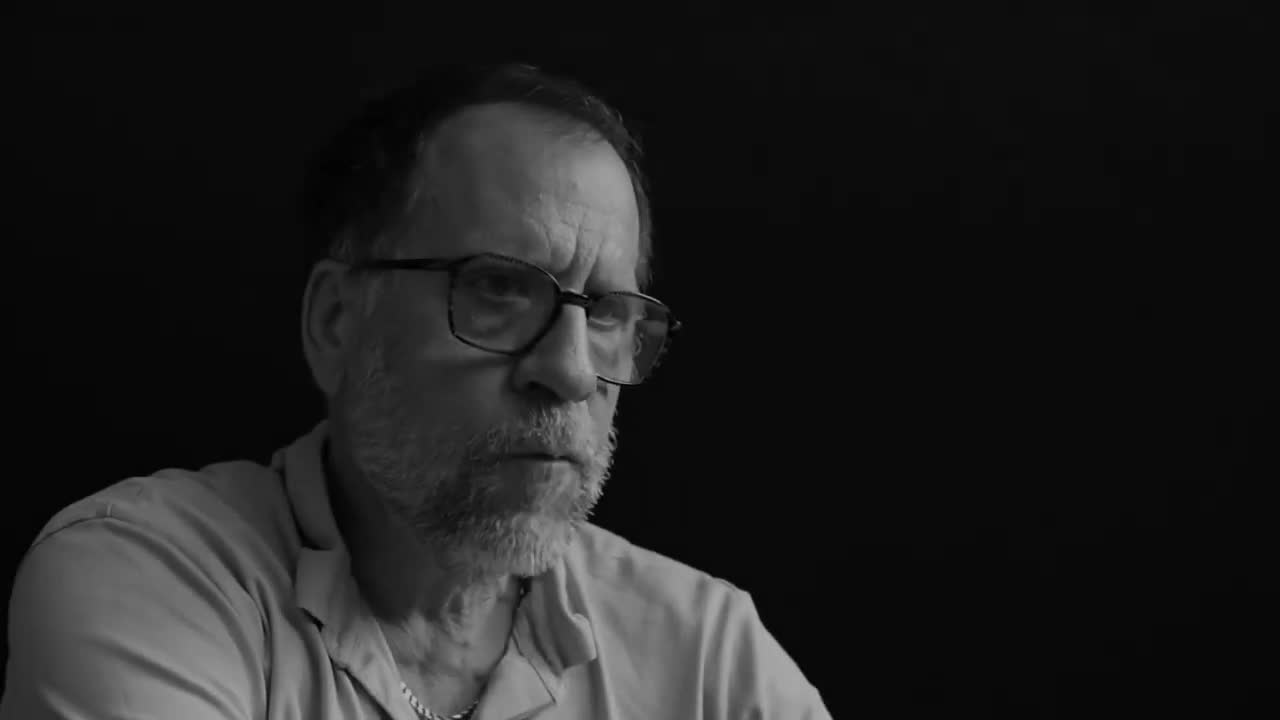
John Vervaeke
“I want to turn”
Spoken in English. Their words, as they said them.
Something has come to me while I've been here, and it's come to me as not just an idea, but a full realization. And, the phrase that came to me was how to involve the whole self without being self involved and trying to get to that, that sense of discernment and commitment.
So yeah, I talk a lot about participation and I don't just mean it in the everyday sense. I mean it in this profound platonic sense of participation and participation horizontally between people and participation vertically between levels of the self and levels of reality. And that hasn't been a waste of time by any means. But when I came here because of touching, being touched by the collective wisdom of, of the group, This question of how to how does how does participation really show up? How does it show up? Consciousness, cognition, emotion, energetically, experientially, existentially. How does it show up? And what are the, what are the opposites? What are the forces on it that pull it from not showing up? And one is when that, when when that collective intelligence appears, right, the logos, geist, the thousand words and none of them right and none of them wrong. Right? When that shows up, like the one thing we can do is we can first person it's mine and then that loses the participation, like consume it. And then there's the third person. It's over there, over there. And yet we don't want to not try to articulate it. We don't want to not try and commit. And so Socrates was often trying to get people to find that place between those two things that are so easy to default to and that our culture so incentivizes us. It's so incentivizes us. I mean, these are the two poles of reality that Descartes gave us. It's like, well, what's real? What's real is the third person mathematical, measurable, objective. No. No. The romantics. What's real is the first person I expressing myself subjective.
I have, I'd come to realize before I came here, especially by doing the after Socrates project, that that Socrates was trying to get people to find something between beyond those.
And that had already called me because I've been deeply influenced by the idea that there's like the modern idea that we can all of our problems, have to be thought about in terms of this fundamental grammar of subjective and objective and know that we're being called to something deeper that is actually the real relation between them. The second person you with the second person you lives And that that's, that's the horizontal, but at the same time, participation, the ancient world had us had an analogous one that, which is the one in the mini, how is being one and how is it many? And that's the vertical and they were, and it's, we want to, again, get between those, how the mini is one and how the one is in many vertical and the horizontal and that's, and, you know, and then, so Socrates is doing this, but he's also calling people up like in, in, in the symposium, there's the ascent of the vertical, but there's the love, the horizontal, like of other people's bodies and then institutions and riches and all of that was powerful and it's real and it's deep and profound. And then it came to like this point because the thing that Socrates of course does is he often, he often doesn't define any of this or create a theory. He disassembles all of those so that a space for exemplifying it comes out. And so I was with people who were powerfully or continue to powerfully call. And so I got this coalescence to that's all good. All that horizontal vertical is good. And yet you're right. The nexus point between them is somehow like the point of reality and realization.
But how do you do it? How, how do you involve the self, all of the verticality from the soul of my embodiment to the spirit of my transcendence? How do I involve all of that without it becoming self involved or self neglectful? And of course, this is also part of the the middle path of Buddhism.
So in the palace and he's self involved, and then he's in the forest as he ascetic and he's self negating, and he's trying to turn himself into a pure object. Neither one of those work and we're in this group and we're one and we're many and we're many and we're one and there's all of this is, but you know, what Spinoza says, you see the whole in each part and the part in each hole. And it's not the subjective or the objective. It's the transjective, the anagogic.
So it's the question to me is now I'm I'm realizing it's it's it's it's coming to grow in me as like a quest. It's asking this question, questing beyond and how do I fully involve spirit, sight, self, soul, in and out, the centre, the circumference, the centre who's everywhere and circumference is nowhere. How do I fully involve that without becoming either positively self involved or how can I bring this and inflate or negatively self involved that the point I have to do is worship the, this and negate myself for it?
I've come to realize that the that ability to find that standpoint with respect to the sacred is the place that I need to get a better sense of orienting towards and being able to navigate towards in order to help people. Right? In order to really help people orient to navigate so that they find because that point is the pivot point, right? That's the point where the denialism can shift.
You can't mandate or manufacture falling in love with someone. It doesn't, it doesn't happen. You just give it all over to them, which many people try to do today. They try to make the lover take the role of God in history and culture and religion and save me. That, that's not, you won't get love. You can make love, consummatory, self centered. And these are just two different sides of the same thing. Like, cause you even hear that you're saying that you're worshiping the person, but you're also, what matters is me being saved. The sacred is here in order to save me.
And there's something about if I can come to that standpoint where the whole of my being has been involved in a receptivity to something beyond so that I'm called to something without being called to negate myself, but to participate, then I can love.
It sounds trite because of core like I can hear people who are platonic callers going, of course, John. Plato realizes the deep connections between ontological participation and eros and love. And this is one of the profound insights. And and then I could say back in the same kind of, of course he said it. And of course I know that. And right. And Ivan Illich always knew he was going to die. Two plus two equals four. And then you get, oh, and what I'm, I'm, what I'm trying to get is how to, like, how do I show up for that? And how does it show up in all of these centers and how they're aligned and then how the world is calling me and how I'm called into the world and how am I called into other people? And I, I mean, I don't, I don't know.
Well, again, it's that it's that it's that it's that standpoint. I know what I don't know, which is of course another feature of love. Right? If it was just self power, it's not love. It's just other power. It's not love. It was just knowing that it'd be knowledge and it was just not knowing it'd be ignorance, You know? But it's it's it's this. And so it's love. And and and again, that sounds like a Hallmark card. And I I and I'm tired and angry about the fact that we've emptied the words. We've emptied the words. And, so sometimes I will use a word that is old or an etymological source like theologos rather than dialogue because the current word has been emptied. And then, and then people get angry. Why don't you just say dialogue? And I was like, well, because I I'm deeply influenced by how we have emptied words and therefore our ability to think and to feel and to be moved When the words are emptied, we get emptied in our ability to repressence, not represent, but repressence how they can get a part of the world, a part of ourselves called into this.
And, and I have the intuition. Another word that's been emptied, turned into either a magic word of subjectivity or an empty word to be dismissed as woo. Let's see. It's always there. It's always these two poles that empty the thing, and then they scream at each other. That's part of the emptying. But I have an intuition that that point, that pivot point is the point. And this is something else that has been coming. I've been wrestling with, and it's not just these two are coming together. This, this, this pivot point, Plato's problem of what ultimately turns someone to wisdom. And again, wisdom is one of the words that's either magic, magic, magic, or empty, empty woo, and stop hearing both of those and try and get back to the you of wisdom.
What turns people to wisdom? Turning is a good word. The Greek word metanoia means beyond and noia is what I call perspectival knowing. It's knowing by noticing with a probative, insightful kind of noticing that realizes and situates you within more profound gestalts.
And what is it that brings about that metanoia? You know, Plato is perplexed by this because of course you, he has the figure of Socrates. And then you have Alcibiades, astonishingly beautiful, tremendously intelligent, charismatic, gifted, wealthy, influential, and he clearly is deeply, profoundly attracted to Socrates, but he, he turns. He doesn't turn to Socrates. He turns to that self involvement.
I'm reading an excellent book right now, historical fiction, Last of the Wine, and it's set in the Peloponnesian war. And it's set in Athens and following these two friends and the figure of Socrates shows up. And of course Alcibiades is there. And, and, and, but, you know, Plato does this, what he always does. He dramatizes like something that it's not even right to call it a dilemma. It's, it's, it's kinda like if you could take a dilemma and a Cohen and a paradox and all have them all mutually impregnate each other and this, and I don't have a word for it. I just call it like this pivot point problem. Hoping that the momentum of the alliteration gives it a trajectory. Right? And it's like, what does the metanoia for people? And, and of course the trite answer and Plato of course, isn't trite. Oh, it's love and love of what's beautiful. But what's coming up for me is that these two things that were coming out for me as pay attention to me, right? Filled with presence and aporia, right? This, how do I, involve and evolve my whole self without becoming self involved in either self infatuated or the self negating fashion, which is something about really re understanding, re presencing love and that, what is it? I noticed how I use the language when I was talking about that, about helping people to orient so that they can navigate what turns people, what helps bring them to an orientation point so they have a standpoint so that they now turn to navigate in a certain direction.
How do people turn? So they metanoia, they go from seeing it as the emptiness to orienting to it as the horizon of the open sea that's calling them to find new ways of navigating unexplored territory. And that that's that's where I'm sitting right now. I'm sitting right on those two and they're so and I can, I can feel how they're interpenetrating each other and, and shaping each other and calling to each other?
And, of course, I I I I'm exemplifying the very thing I'm talking about. It's like that's in me, but it's not me. It's something I'm doing self power jerky, but it's also tariki, Tanabe. It's also other power. It seems to be here, but it's, it grabs so much. So there's a bigger gestalt that's here, the one in the mini, and it's between me and other people. And, and also like, you know, Pascal, the spirit of finesse, like how, oh, I'm glad that came out. Like, how do I find the I like that, the spirit of finesse so that I it's almost like I'm turning into a poem. So I can finesse the caress that is needed, to address this. And I like that. I like the way that, I like it when that, when that, when, when the muse, the, the poetry starts to come in to the philosophy, that the police says comes into the, Philia Sophia, the Philo Sophia, the love of wisdom and see as I'm doing this. And what I mean by exemplification, I don't mean just an example. I mean, there is a presence, a spirit that's alive in me. It's, it's electrically running through my thoughts and my body, but it's not just a sensation or experience. It's, it's, it's, it's, it's a living intelligibility. That's opening things up to me. And it, it, it has this almost move and you like these movements are almost synesthetic gestures for me that are imaginally trying to not only convey it, but invoke it.
How do I love this? Thou, it's neither this nor thou. How do I, how do I love it?
How do I care in that love so that I'm not deceiving myself that this isn't some grand complicated narcissistic, spiritual masturbation or some grand narcissistic attempt to finally confess right, to the God of my childhood that, I had left behind.
And, and soon as you do that, soon as you take that existential stance and love it and live it and logo sit and leap it.
And Augustine felt this. You feel the counterweight. It's like tasting the honey of that sunshine. You start to feel all the dark crevices, all the ways in which I fucked up in which I failed in which I'm faulted. And I did even vicious.
And they come out, and they, and they, well, that light that you're loving, that light has lighted us. There, there, there, there, there's a dark conspiracy between part of the voice is saying, look at what a shit you are. You can't do it. And the other voice is saying, go with your desires, go with your anger, Take out how that person hurts you and nourish it. Nourish it. Don't forgive.
You see? And then that leads me to this other thing that I've been really practicing. And as I'm speaking here, I can, the logos is bringing all of these together, which is there's something about those pivot points in this other, you know, reading Hagel spirit of random spirit of trust and right. And, you know, and you, you have this really accurate, like this really rational, real is the rational, the rational is the real Hegel, but he's forgiveness and trust are so central. And I've been trying to bring in forgiveness into my practices because, and it, it, it, it, it, I, the time I couldn't have done it before now because of my very fraught relationship with Christianity. But this again, words that I heard a thousand times, but the words came alive for me again. And again, it's at this place that neither the I or the it, but the you right here that in these words of Jesus of Nazareth, you're forgiven when you forgive. If you need not wish, if you need forgiveness and who doesn't, you will find it in forgiving.
What would it be to practice that to really try to soften my hard heart, open my closed heart and really like really, really realize again, this way I've been talking about it really whole person realize the way I need forgiveness Such that I'm empowered to forgive people I have been unable to forgive.
And, and for me, that seems to also be right, again on this involving the whole self, but not self involved self power and other power, this unique, but also so much more.
I mean, all of all this is about loving wisely and it right in and forgiveness could become either one of those. It could become heal me. Heal me. I'm so hurt. And is there anything is there anything that makes us so selfish as pain or our own hurt, our own hunger?
Or forgiveness could be self negate, lacerate myself.
But again, like, something other than that is what I'm feeling called. It's it's calling to me and what I'm being called into.
And so like participation, love, realization, forgiveness. They're all, they're all doing this. And again, they're not just doing it as some constellation of ideas. Parts of me are being activated dangerously. So there's risk in the activation and there's the risk of hubris and there's the risk of not humbling, but humiliation. And there's risk of a gravitas being being sucked into a pre rational or there's the risk of, right, just turning this into the the rational and the pejorative sense of logical, the mere manipulation of complexity.
But there, but there's a, there's a like the transrational where this more encompassing where all of that is active. So that, and maybe this is it. All of those pivot points, all of the metanoia, the turning, the participant, all of those, this, this is it's this is what it takes to really address self deception.
Because if you don't involve the whole of the self, the self deception, the parasitic processing, we'll just move to another place, take up life and residence somewhere. It will inhabit other habits.
It's really sinking in for me right now. This what turns us, How do we participate? How do we love? How do we forgive? This is all about, yeah. What is needed to truly apprehend, appreciate and address self deception? If I think I'm gonna overcome self deception, I will do this. You failed. Yes. I'm gonna get somebody else to do it. No. Because you have to be able to indwell them and and then internalize them and take them into yourself. It's it's a you. Right? It's it's I and you and I indwell you and internalize you and that's the love and that's the participation and that's the self deception.
That's that's the hardest thing of all maybe. Right? I mean, I talk a lot about it. You know, when you always face the risk of the doctor who thinks that if he studies the disease, he will be immune from it just by the act of studying it, which of course is an instance of the very thing I'm talking about. Right. I talk a lot about self deception and I don't just talk, I study it scientifically or reflect on it theoretically, philosophically. I try to enact it, come up with practices, but all of, all of this is in some way returning to me to, to really, I don't know. I'm not I don't have the attitude. I wanna say something like to re realize, reinvent you the power of self deception and what it would really take to turn.
And see now this is becoming I'm going to the pivot point because I really wanna turn.
And is this all just, again, a very complex way in which John Ravecki has just made this all about himself. You see, again, I keep coming to the very thing I really wanna turn. And I, I wanna say that in a way in which it's not about me because I want the turning to connect to something that is beyond me, that has a reality, a depth beyond me. I wanna really turn, but I don't but I'm not and I also just don't wanna treat myself as a specimen that I'm examining so that I can write up some scientific paper. Like, I really I wanna come. I want my muse and everything I've learned and my faults and my virtues to all come together so that I can, as honestly as is humanly possible, virtuously mean it, meaning and all the meetings of mean it. When I say I want to turn and I want to turn in a way that helps other people to turn.
I'm done.