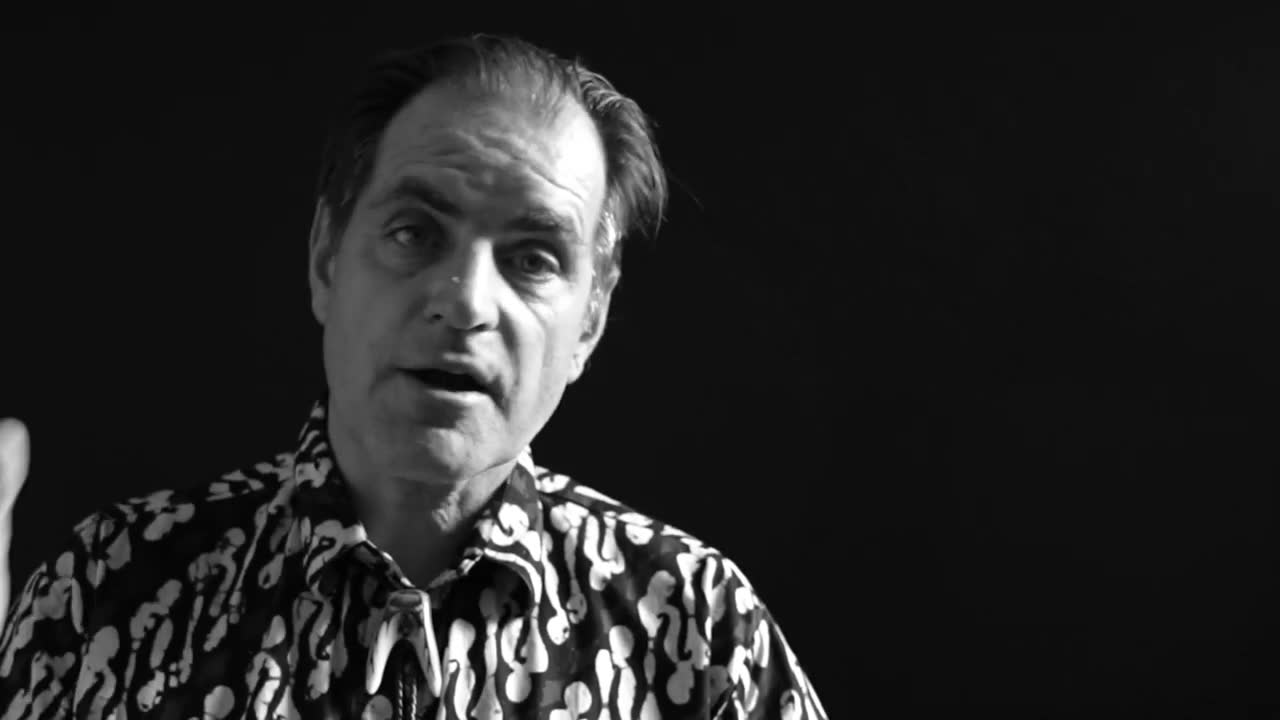
Metsa Nihue
Spiritual globalisation
Spoken in English. Their words, as they said them.
I would just, you know, start to say that, as as I was invited to this interview and I knew that somehow I was gonna be held through a different container that usually in interviews held. And, I thought about it.
And, you know, what inspired and has inspired the most in me in my practice, as someone who carries different lineages and different types of medicine, altar as a tradition. The music is really part of an expression, the the prayer, the mantras, the the forces by which the altar is rooted in the lineage, and human being being just the conduit of this force to be expressed. And songs, music is such a way to access to trends or to have to manifest the source of inspiration. One of them. And so, you know, it's been almost thirty years, twenty seven years that I'm in practice with plant medicine work and Native American, Indian, different traditions. As a Westerner, what has been interesting in my process is, you know, in my teenage, I was kind of awakened into the concept of energy and relationship with energy and really feeling a pool and and felt sense of that reality, but didn't have really a cultural context to place it and and and and find education around it or or guidance. And so also it tapped into a whole imaginary self, you know, and what is, you know, folk folklore and what was part of our maybe medieval kind of relationship to Earth where it seems that way, way back in the days, there was a reality where our ancestors somehow, had access to something energetical and a mistake related to nature. And as I dove into the reality of the Amazonian world and its cosmic vision and and and practiced and embodied, because it's really an embodiment, that reality from imagination became an embodied reality. And so in a way, I feel for the interviews that just express medicines for songs, It's just a part of one. You can't really separate it. You just become who you are, what you are. And so it was a way for me to introduce myself.
And the song, you know, I started singing in Shipibo language, which is one of the lineages that have been introduced to Ayahuasca and Plantmanson. And mostly three indigenous tribes of the Northeast Of Peru, the Agwaduna or Awaloon, which also work with Ayahuasca, but they call it Yahel. And they work with Pulgarhaska, which is much more purgative. And, they work with Bilkut, which is in the familiar of the floriponios, or bloomancias, which is also a very strong psychedelic plant that you take just by itself, and it's not mixed with anything else. And that plant in particular doesn't consist in journey, but it consists of coming back to reality because the journey is so strong that you actually fall asleep and and wake up in a different reality. So then you have to come back at some point.
And the Shipibo Konebo are more in the Central East, Ukayali River, and they're very well known today, I guess, more in the Western cultures through their fabrics, their songs, and, you know, they have a very beautiful way of singing. And what's very fascinating for me in the practice of Ayahuasca from the sculpture and for this particular Shipibo tribe is that the practitioner develops skill to take the medicine, Ayahuasca, but it could be also other kinds of medicine. And then through the influence of the medicine, what I call the drunkness, not the trance, but you're just kind of altered and like, super aware somehow. But and through experience, you build the capacity to actually diagnose. So you have access to data. And you have also the capacity to communicate, interface, transcend, bring in. So you have a super extension of your capacity, you know. Some sort of antennas, some sort of tentaculus of energy growth out of you. And because exercise of training goes through long periods of isolation in the jungle where you take all sorts of barks, roots, leaves, and plants, and fasting or eating very particular food with no human contact, no salt, no sugar, and and also preserving your sexual energy, you're kind of becoming the medicine. It's an embodiment. So the internal energy of your internal clock then matches the external environment by which this medicine lives in, you know, And in which this medicine are, and so you can kind of connect. So it's a body work somehow. I always think of shamanism as something or spiritual, but that's to land in the body.
It really fascinates me that, you know, that you can just sit in a poor kind of way, get high and then check something out. You know, see someone's cancer. See someone's liver. See someone's kind of picture of not aura, but like what's in the scene, what's going on. Behaviors, addictive behaviors, anger behaviors brings also some sort of repetitive energies that manifest in entities and things. The Ayahuasca journey somehow reveals those entities and become alive in the field. And so the practitioners through exercises and concentration and songs and have access to influence the field of the patient, somehow participate. So I wanted to just express in the song a little bit of that vibration of singing because it opens a connectivity to the invisible. And sometimes it's a very pragmatic, simple way. We usually get out of the way. We we tend to overthink things. Or we think we know.
So drum is more an added to my Native American Indian days, if I may say. I spent quite a bit of time in the Lakota or Gullah culture, though I don't speak the the tongue. I sing in some some of the songs, and so I kind of married different things in my Shipibo extension song. And then I switched to a La Cote de song, which is, a song about calling on the different direction and their powers and honoring, you know, that and just wanted to to honor my peers and I have such a, you know, respect for their culture and what these cultures carry in terms of power, connectivity, wisdom, connection, knowledge of the pharmacopoeia, the plant medicine, and the magical energetical connectivity that offers that wisdom.
I'm just very grateful to somehow have been placed on the past and I've connected with people that are amazing and also quite suffering and have much less than us in the West. There's quite a bit of suffering too here, But also which culture is dying due to the Western influence and all the different things that are happening, religiously or economically, you know. The youth is attracted by another poor than necessarily the wisdom of their the pair or their elders. So and also the kind of spiritual globalization since, you know, there's more information about those things, a lot of people more have access to it and and traveling to these different, places and connect. And sometimes they're being taught or guided to a certain degree, you know. And, but very quickly I've observed that there's a lot of spiritual ego. And after two or three months in a place, people come back in their original communities and start to prophetize and declare, you know, that they know something.
Which is a bit of a sickness of the time today, you know, there's a small emergence of the neo shamanistic arts and everybody is a shaman today, so, it's a sickness in a in a time. This entitlement of wisdom, you know, self declaration that I know. And, I don't know much myself. It's not for everyone to learn to become a practitioner in the art of healing with certain things. To become eventually a helper or to be aware or sink into the culture, but it takes years and years. It took me about fifteen years to really ground myself in the practice of plant medicine. And I know very little in cooperation of, you know, some of the elders that I know. Incredible capacity and and not only know one thing but the whole system and the interrelation and the language and the animal relation and which is it takes it takes time.
But I think, you know, we are in the time of merging. And it's something that I'm really contemplating without knowing really what to do about. You know, it is that we have to preserve. I mean, I feel we it is important to try to save and preserve as much a culture of origin and its authenticity. And like I said, there's always a sense of evolution in it. And at the same time, as we have access to the sculpture and inserting them into our communities and and environment and and, you know, bring that home, what can we use? What can we do? You know? And I I think the ritual of water is very good. You know? It's very simple. But I I I, for example, myself, I mix it somehow with a meditation, which is not necessarily a shamanistic Amazonian or a plant medicine. You know, they don't meditate there. They don't have a relationship with meditation in terms of they have a relationship with concentration. They have a relationship with communication. They have a relationship with, you know, yeah, communication and and and intercommunication, you know, and and psychic communication.
Felt, you know, communication. But meditation for us in the West would, I think, are very much rooted in the mind allows kind of the the noise to quiet down. So then the bandwidth can tune in something different. And from that place of quietness, when we engage in ritual from that place, then we can maybe sense what's happening around, what's here, and and and and look into, around from a more centered perspective.
But the whole principle behind usually this medicine and these people is that humility, you know, is very important. And reciprocity, usually you always make an offering, give something before you take, you know, honoring life. Like I tried to express in the song, we all come from water. And we're made of water. Our body is 70% of water. This planet is 70% of water. And we all come from a female, you know, our mothers, and that carries the water as a baby. And, and so we respect the feminine in the sense that women have this incredible gift of life giving. And and we have to support and protect that, protect the water. Without water, there's no life, you know. And of course, people would argue, was that air, was that sun, was that zest, was that zest? Yes. But in the water, evolution also has been scientifically proven that evolved and somehow took us to where we are today. And what's interesting also from, like, the standards of, you know, shamanistic arts or element. Listen and have a memory and have a voice that can be heard. So ritual rooted in a lineage that has carried practice of centuries that know how to speak and address certain things. It's important to be curious about. It's important to just kind of pay attention. Maybe there is something here to learn and somehow regain this universal connection to the sacred, which is a very simple thing. It's our environment, the trees, the water, and I'm not pretending here that suddenly we have to just levitate in front of trees 20 fourseven. But just, you know, engage slightly from a different angle here and there. You just see, I see you and I honor you. I see water and I sing to you to say thank you, you know. And that sense of gratefulness is maybe the most beautiful thing we can take on and reclaim and hopefully to make a better world together. So very grateful for just a little time to express that. Thank you.