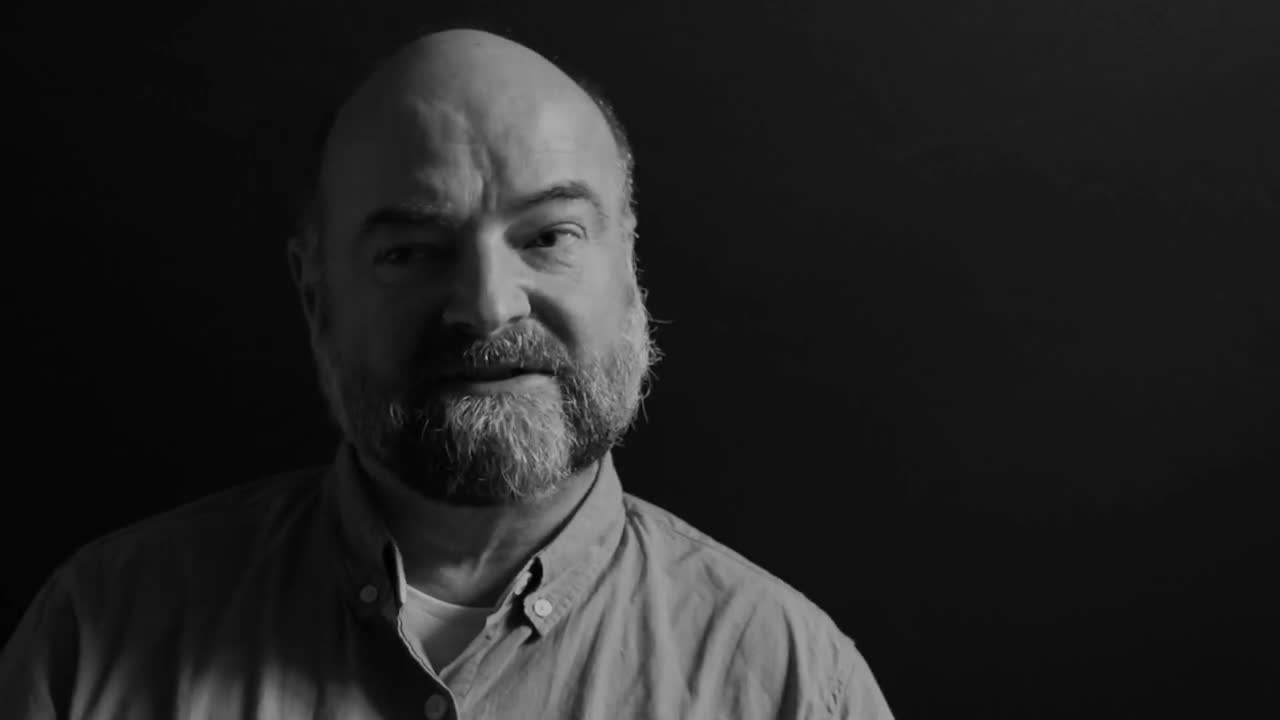
Rainer von Leoprechting
A contemplative interview
22:12
Spoken in English. Their words, as they said them.
We're in the middle of a retreat in Bazarac.
All interested in transformative wisdom practices. So their call was you have a lifelong practice under your belt, and I was one of the invitees. So so that is the sort of hosting for the process I'm now in the middle of, and it feels like a good moment to reflect on what does this actually do to me. It's a very concrete place, which is not just a place, it's a project, it's and this is beautiful to see that there are people who, on their own initiative, kind of develop ideas and plans that were very dear to me that I developed on my own. So it feels like time that many contexts connect. So since 2012, I'm a founder of a community, cold living place in Austria. It's more than two hours south of Vienna, close to the Slovenian border, where people still speak a version of German, but a few kilometers further down, people speak a version of Slavic language called Slovene. This border is a very painful border because it was artificially drawn after the first World War, and somehow I have a propensity to live at these liminal spaces, these frontiers, and feel like at home where there's not just one nation at home, but many nations. So in that place, there is people who are not all Austrians. Actually, the majority are Austrians at that place, it's international people. And we have had faces of bliss with kind of people living in a certain harmony, and it was really complimentary. What one did was helpful for the other and vice versa. There were moments of crisis when kind of everybody left and very few people stayed, and we needed to start over, and it was just so healing for me to meet other founders. There are not so many around, so one of my kind of awakened dreams here was to meet people who have gone through so many experience. And, in my case, they're even younger than me, and that feels very reassuring kind of that there is probably what I have been starting is still pioneering, but maybe less pioneering than it was ten years ago, which is good for pioneers to see. They are not alone. They are the crazy people following the same unbeaten path or parallel path. So that was quite inspiring, I must say, for the least, and it feels like, well, there is ideas one can share with people who go through the same process and not just about it or having very theoretical concepts about it, but really have tested it in reality.
It was very interesting to discuss about how can one actually address poly crisis in a way that mainstream does it a bit faster than need another generation of convincing. And they were conspiring, so something might come out of that. So there is kind of this end of my more professional work of being related with people who want to change something. They take responsibility. They mobilize resources, call them managers, entrepreneurs, change agents. That's very present here in this place and around the gathering. And it's people who are deeply concerned about things and have focused on developing practices that can or should be helpful. So it feels like this is a place I feel like fish on board. So yeah.
So it feels like this is really like a practice ground, like a place where one can rest and resource, and it feels like I come to some, yeah, reflective point in my life. I have now fifty eight years, so indeed there is already quite some life lived, and there has been influence by other practitioners who are still kind of my mentors, even if they're dead since long. So one mentor is Jean Monnet, who was the one who created the actual practical impulse to make Europe a peaceful continent. He did that back in 1950, building on lots of practice he had developed at the time, but I appreciate him as a true practitioner for creating synergetic relationships between as hard to consult institutions like administrations and governments. So I learned a lot, because he left something behind, his memoirs that he spoke as a gift for people to do the same. So I still feel like I have received that gift, and I still feel like it's about to transmit it, and to make it work. And what inspires me is he actually did the thing with the European integration when he was 60. So he was not too old then, and he had still thirty years to serve, and probably that is what lasts most from his work.
And This is also a place of transmission. I feel there is this shift from being a practitioner, professional, consultant, and whatever, and all of a sudden to be made or seen as an elder, like someone who doesn't need to do so much, kind of, but is more there to inspire, to share, to witness, and to encourage people who are ready to do, to just do. And at the same time, I'm not out of the doing at all, but it feels, yeah, a bit strangely in your experience to be in that other role at the same time. And it feels on the one hand strange, and on the other out of a sudden very natural. Of course, by others seeing what they see and witnessing back to me how they appreciate what I just do without even knowing what I do, I all of a sudden realize that there is indeed practice under the belt. There is precision. There is knowledge of practice.
And our meeting here, there is practice in how to set up conduct or just host conversations. That is a very important practice. And we are by far not there yet to really know what good hosting truly is, although as we know it, but it's not yet really documented and shared and systematized to a level that it could be. So that was an interesting notion here, to understand that by seeing some imperfections of the gathering itself, which always happens, so it's nothing special, but to notice them, notice them with many awake eyes and senses among all the people who are very aware of these things. And it's also interesting to notice that there is actually knowledge and experience in the room plenty to see how this quality can shift.
There was a moment of reckoning. There is many, many, many practices present here for all these practitioners, and it might be a worthwhile study to have these practices speak and learn from each other. So that underlying principles of practices become potentially transferable from one to the other, to see how is that principle played in the practice of hosting conversations as compared to the practice of hosting live improvised theaters with people? What does listening mean in one context, and what does it mean in another? And to derive from there quality into, well, how can we develop practices that have become another level of what is a certain practice and informed by all this kind of cross checking and can be more powerful, more impactful, needing less time, and so on and so on.
So it could be that you just captured me at a moment where my life is shifting from one certain level towards another, and I'm just noticing the potential of that. So I was, for eighteen years, a European official, and I was going out there with loads of practices that I had learned with a comfort of having safety for employment and having lots of work around me I just need don't didn't need to to to market for. But with the limitation of it kind of always being kind of the same thing. So so that limitation became more limiting than the other factors enabling. So at one moment, I was ready to move on, which I did and made myself self employed, started the co living project, and did this all with a new life partner. So this was kind of many changes all at once. And as it happens, when one tries too much at the same time, not everything works out beautifully at the same time.
And, in my professional work, I am still inspired and even stronger so to contribute to the transformation of our civilization while working with people who take and have responsibility. Now most assignments one gets as a consultant is with people who don't have that same ambition to start with, while they're confronted with, the signs of decay in our ordinary systems because they are not working as well anymore as they did perceived the, some thirty years ago or so. So in that sense, the need for the shift is present, but not always articulated. And what's happening here is I'm meeting people who know that need of shift. And it feels like there is a potential for a coalition forming where this work becomes more radical and gets to another outreach. And there might be more partners joining into a whole alliance of consultants and practitioners to really serve for a shift in business models, a shift in way how organizations work, a shift on how whole economic sectors are actually doing their work, which could address at least some of our many crises of our time. So so that becomes one of the potential developments there. They have become a bit more real through some of the meetings and conversations here, so that was really a good surprise. Not planned for it, but very well received.
Like, another practice that is how to read organizational cultures in a way that the culture is not in the way of what organizations should be doing, could be doing, but as it is supporting the next levels of their potential. And how can one intervene in cultures in a way that without people thinking and reflecting and stopping their work too much, all of a sudden do the necessary shifts, whatever is necessary then. And that's another theme of work. I felt like I could unpack here and have people respond to it, share their experiences.
There is so many things I had to fight to explain this to people who had deaf ears and blind eyes, kind of. Like, let's just mention the notion of adult development or cognitive development that is still not very popular in human resources or managerial trainings and so on, but has been one of the, for me, most important insights in my practice to actually see that you you need to know what people are capable of in their jobs or in their life before you kind of make them responsible for things that they are not even capable of. So and capability can be observed at a level that is deeper than competencies and what people show as a practice, but is more the possibility to acquire a certain practice, which is one of the skills that I went into very deeply twenty years ago. And now I notice kind of me having done this now is very respected by younger practitioners who have somehow got wind of this depth of science and, using it or wanting to use it and see the relevance of it. So it feels like the pioneering has been a bit less tiring than it used to be, but it feels like to be see begin the the the the rewards of having been there on the long ride. And, similar with systemic constellation work, which, is slowly landing, similar with, really, going deep and hosting as an art that has been pretty innovative some 20 ago. And now, people are really seeing this in mainstream as something. How can we have better meetings? I mean, at least people ask that and see this as a lever for change. Yeah. I was one of the people who were very early adopters of many things that were unproven, untested, just coming out fresh off some developer's mind, and I had the instinct to follow people where I felt quality, and I was very dissatisfied with what was offered to me as standard practice when I got in touch with them. So so that makes a difference to see that. My intuition probably realizations that have become even stronger during the meetings here.
So people know that, over a lifetime, they will be changing, and they have been learning one or other relevant theory about that, which is new, that has been not common knowledge twenty, thirty years ago. So so that is, for me, a generational theme, so to speak. And then having and developing surround noise is, of course, the next step then. And, yeah, I have been developing even IT tools that help people to recognize where they are in their journey towards wisdom. And even if they don't recognize it, meaning one cannot just observe where they are through them interacting with moments of success online, and so people doing that, they make visible, if not to themselves, at least to a knowing system expert system, where their level of capability is more or less. So it's not a precise measure, but it's precise enough to situate people in a certain range. And from there, one can offer them opportunities they are ready for, and they are beyond what they're currently probably doing. So for me, the whole motivation to develop that had been kind of like, how can we make development kind of a day to day practice that people don't need to study for, don't even need to know about it, but it's happening in a supported way, so how can we get people in contact with life opportunities, but inviting them to grow up into a new level? So something that I experience right now, this week, where I feel like, oh, I feel like more seen, I feel like more appreciated in what I'm capable of, it's like a developmental moment, where you just even see what you have been doing, developing over years. And I want people to have that on a regular basis every couple of years to have at least one, if done, many such moments and to facilitate them to move from one level to another micro step level further. And that is something that's just standard. So that's why making this doable with the help of an IT tool was kind of, of course, what you need to think of when we have the Internet and everything's becoming digital. As much as the information that we are using to create life opportunities is more and more digital as well. So that's why I have a tool that could work with all sorts of social applications and platforms, be it a social network or be it a job portal or a a learning portal or a dating portal and so on.
Well, my visionary mind might want to go to see, well, if everything goes well and all the potential would realize that we have here, how what would we be probably talking about in three years' time? And as we speak, we see already transformations like the energy sectors and complete transformation and other sectors are getting warming up for it. But all of these transformations, they feel still clumsy, take way too much time, way too much resources, and so on. So it feels like in whatever sector, one could give in some more wisdom into that transformational coordinating spaces or eventually create them where they don't exist yet. That feels like maybe one of the most important interventions of our generation. So it would be thrilling to be part of such a project. And it feels like with the people who are meeting here, this actually becomes more real than it had been for me before.
Yeah. So this is kind of like a bit of hopeful future outlook.