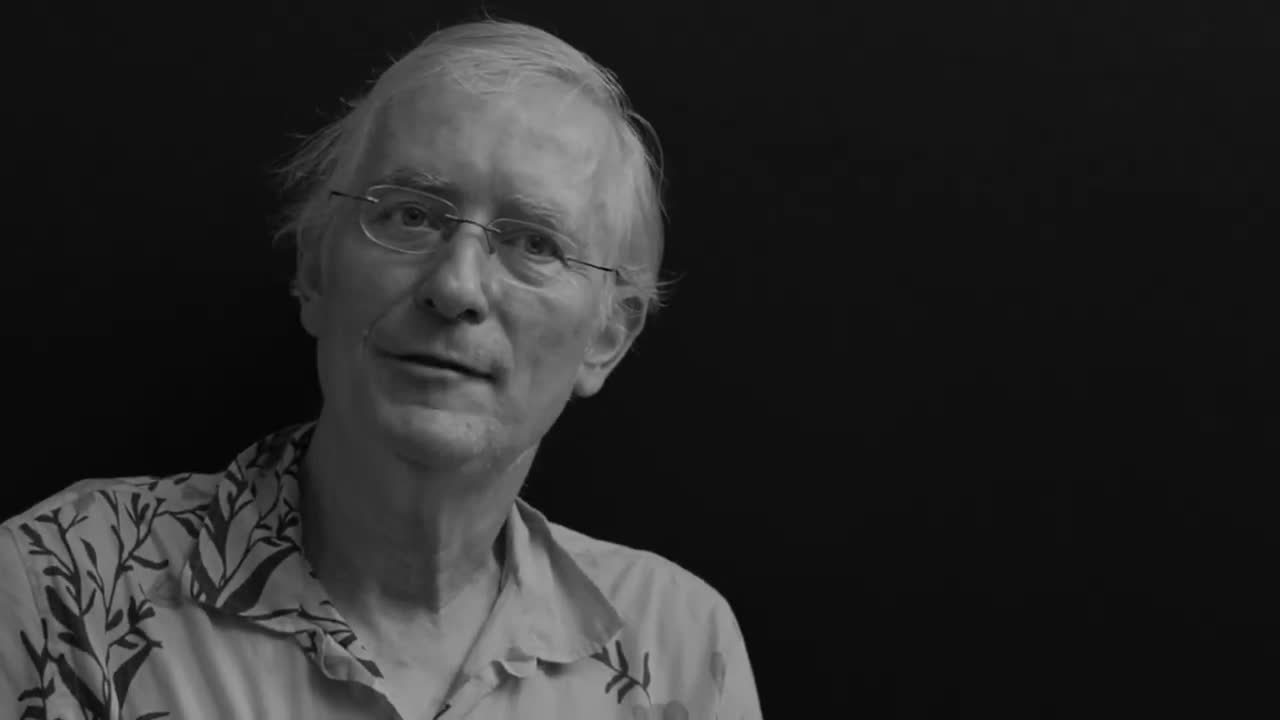
Thomas Steininger
Reaching for new qualities of the “I”
Spoken in English. Their words, as they said them.
This practice of merchant dialogue and a merchant inner being becomes a practice of cultivating freedom from oneself. In service of the shared wholeness that we become aware of, that I, on my own, cannot access. Because the place where it lives is between us and I don't have the place between us. I need you and everyone and everything else to be aware of the between us. Us. As soon as you're here, I can start to relate to the between us and see, Oh, wait a moment. This is a more whole place than my place. And the insights opening up for me that are not opening up for me when I just am with a Thomas space and Thomas perspective.
From my perspective, I even would emphasize that it radically has the capacity to radically transform the eye. In that sense, I only can describe it in a descriptive form that it seems that you start to look through the eyes of the shared space. There is a shared looking where the experience is strangely enough we seem to look from the same place.
Of course, there is always a Thomas party in me remaining also necessary for that. That's part of the richness of the facets. But it seems that where we look from is from the interbeing space itself. But it's really something that I find significant because it allows us to cultivate a certain freedom of oneself.
In the context of the history of consciousness, I see it related to the birth of individualism around the Axial Ages where something in the development of human consciousness changed in a dramatic way where our relationship to the sacred that was previously held in our relationship to nature and power gods changed in the simultaneous discovery of duality. I mean duality in a good sense. The relationship of an individual to an absolute. And this was the birth Kalliasma's cult is the Axial Age. It's a certain period, August to February. Where most of the great religions, kind of got founded, like Lao Tzu, Gautama, Shankara.
In Persian mysticism, you find Zarathustra, you find Elias. Or as in the Hebrew tradition, you find, Plato. All of a sudden, the context of sacredness and spirituality changed and in different ways. Taoism worked very differently than Christianity or or Hebrew religion. But there are similarities that I would put to there is an individuation and there's an absolute, not just the multiplicity of the relative. There's something that we start to relate to very much and it's a double discovery of this absolute in its different forms and the individual in relationship to that. I would claim what I think to see is that there's something percolating in world culture with a lot of We space practices and also romantic going back to shamanic culture and this also in a positive sense, a kind of experiment to go beyond this hyperindiguation point where we are right now in and find a new embeddedness of our indiguation in the sense of wholeness. And there's a lot of different we space practices calculating. And they are different and they are experiments. And I think what we are doing is just one experiment among others. And my interpretation of it is that evolution is looking for itself and finds its own articulation in all these experiment fields are just the places where it's testing itself out. But my hope of this kind of life development is that it is it creates what I would call a trans individuated new awareness of the wholeness of reality in a way that is beyond the subject objectified that in particular in the Western culture have cultivated so much. Ironically, our hyper individuated postmanic culture is a deeply collective phenomenon. Everyone is completely, oh, I'm here but we do it all together. So that's part of the fun part of it. The difference and part of the motivation of my our work is the difference it makes when this interbeing space becomes self aware, like individuation becomes self aware. So not just to experience it, to be in a role, like being excited by it but to be aware of it so that I can start to respond out of it. Somehow in a shared interbeing space, something loosens a little bit with my self identification to the degree I start to, if we may say so, be in a love relationship with this space. There is also a spiritual quality that gives me strength to grow beyond myself. Because otherwise, hey, why should I? But if there's something between us that I deeply honor and love, that gives me strength to also go beyond my limitations in order to meet that. So, it becomes a self spiritual power.
Then there's something where a synergy opens up. And the experience, and it's often reported in that way, is that there is a different intelligence showing itself. That is not my intelligence, but we experience it together. So And that is Quite often people find this also as very liberating, can be also experienced as threatening.
But it is the experience of a different force. Because all of a sudden there is something which is not my intelligence, it's a shared one. And then there's work needed with that because there is also the danger to let go of your individuality. And then basically you end up in conformity.
Yeah. And then you just need a guru and then you have a perfect cult situation, for conformity. So it needs this tension also where this wholeness is experienced but held also with the responsibility of my individual responsibility to partake in this. So And to my degree, you never can give up this tension. This tension has to be a living one where you respond to the wholeness, but you also respond to your authenticity in your responsibility in that. And that's a living whole that is ongoing. It's not just a wholeness, it's a very living, developing, emerging wholeness.
Because you also have the the other side that many highly postmodern identified people, they are completely scared to go anything in wholeness because I don't want to lose myself in that. And usually the justification is that because wholeness is regressive, it's basically losing my authenticity in some kind of forced unity in that. And to the greed it's true. But to see that, there is a dialectic that has to be cultivated between both where they can develop a synergetic relationship between my autonomous authenticity and my responsive realization of wholeness between us. And as soon as both qualities somehow start to become present, one can cultivate them.
I was so overwhelmed, but this unity feeling that I really didn't care all about authenticity. I just wanted to dive into our unity field and my holding responsibility for that, I didn't care because the feeling was too good. Or I was so invested in my autonomy that I even don't allow the possibility that maybe between us a synergetic field is opening up that I can respond to and has its own intelligence. That's dangerous. It has its own intelligence. That means, I surrender partly my intelligence to a childish intelligence. That's a dangerous move. That's a dangerous move. And it's true. It's true. How can you hold the directive of that? But I think it's, there's no answer, at least no answer. I am aware of then culturally learning how to how do that together and learn all the traps and try to avoid them. This Greek hero's myth, which is this archetypal figure of the Western individuation process with the hero myth, I think has a direct relationship to a response in our culture. This is the Christian guilt orientation. Because the Christian power came out of realization how the hero myth also really created a lot of devastation. So, they said, my interpretation, it's not by chance that the fertile ground that first created the Greek hero cult then created also the Greek Christian guild cult, and it was kind of trying to work it out. And both sides, again, had had their shadow sides. Both sides also had their beautiful sides. And, hopefully, we we find ways that, hopefully the learning process can can also speed up in in that, but we have to find out.