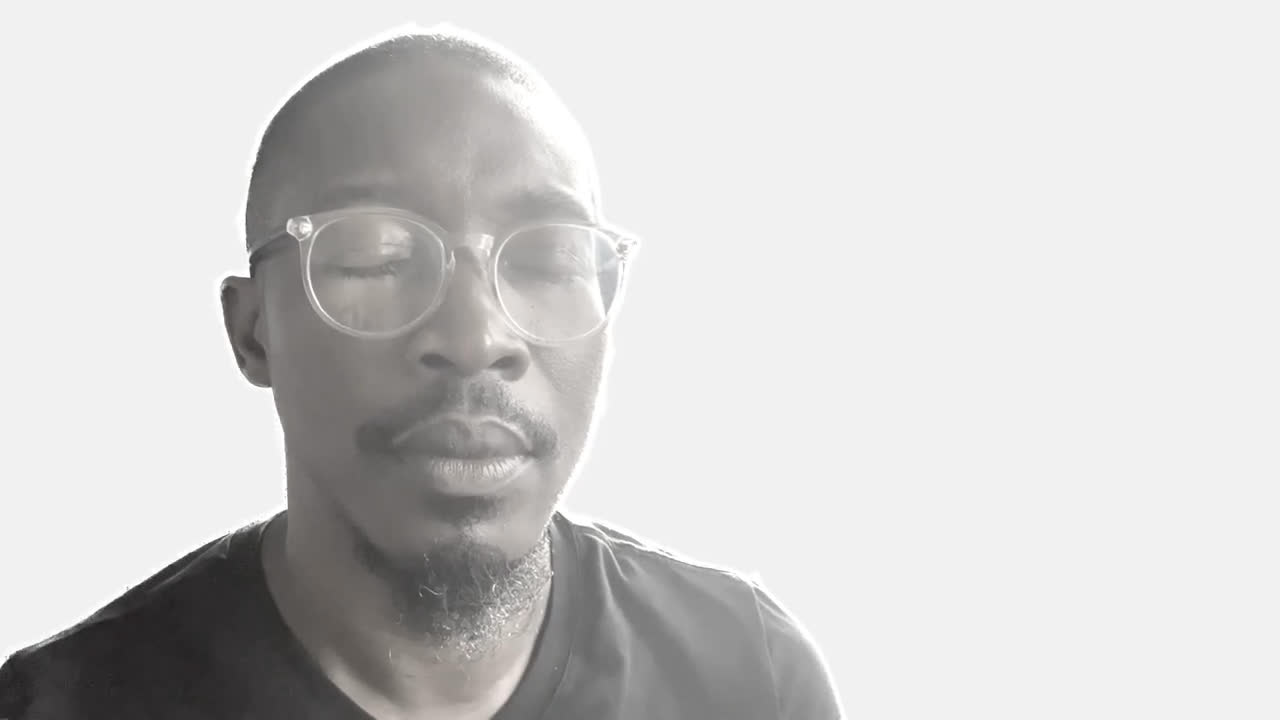
Akasha
Seeing as a collective practice
Spoken in English. Their words, as they said them.
I keep seeing this word Sawubona, which I learned about a few years ago.
He see you a form of greeting in South Africa, a Zulu greeting. We see you, and you are important to us.
We see you.
At one point, I used to think this based on some of my initial readings that it was, I see you.
I've since been corrected that essentially it's a collective seeing, it's not an individualistic thing.
To see as a collective, to see each other as a collective.
The air is power. That is liberation.
I feel a sense of love.
We see you.
So But it also doesn't feel like it's just seeing you, skin you're in, the height of your body, length of your hair, clothes you wear.
It's like seeing the things that matter to you and even beyond that.
Seeing the divine in you and perhaps even beyond that.
Seeing you in the divine and perhaps beyond that, I feel like it's impossible to truly see someone without loving them, without surrendering to them, without feeling one with them.
All my work seems to be about this, whether I call it coaching or teaching, facilitating, parenting, partnering, workshopping, yoga, and my work seems to be about this. Because as I'm talking and I'm looking at what am I really doing? What am I really about?
It's this practice of.
Can I genuinely see someone? Can I genuine to see myself? Can I genuine to see us?
I think for me, it's about the depth and quality of connection.
Yes. Tasks need to get accomplished, but it was also a part of, I think, seeing and attending to what matters.
What if seeing becomes my measure of time? What if seeing each other and being seen becomes, for all of us, our measure of time?
But people might say, oh, I don't have the time for that. That's the point.
We don't have time for that. We have an opportunity to see, to be with each other.
I found myself trying on this saying that I've heard from a few friends and colleagues when we're trying to schedule some time to talk and they say, oh I have a hard stop at the top of the next hour. A hard stop.
I tried it all a few times and I'm I realized I don't want to have a hard stop for anything in my life.
I wonder if I can float in and out of things gently.
If I can float in and out of connections, easily. It's supposed to hard.
Just a couple of days ago, I was riding my I was not riding my bike. Enjoy riding. So I'm in my riding gear, got to where I'm going. Then I needed some food. I was hungry. And so I jumped in the car. It's around 6PM and I'm driving to get some food and I could hardly see outside and I tried to turn the headlamps on and they were already on, and I immediately start thinking oh god our headlamps aren't working. And I'm trying all kinds of buttons in this car and I'm like, oh I think there is something here that I don't understand about the car. Everything is about the car. I'm like, I think I need to call the mechanic, because something is definitely off with the car.
And when I was maybe a minute away from this restaurant where I was gonna get some food, I realized I still had on my sunglasses on from riding.
I took them off. I'm like, oh, it's turned right out. But what the heck was I doing?
God, I couldn't stop laughing. There I was, twenty seconds ago, blaming the car, the mechanic. My partner, me, for not keeping up to date with the car. All kinds of things was wrong. And all that was happening was I was looking out at the world through dark glasses.
It was such a funny moment, but it was such an important one to know whether I reflected on it. It's just a couple days ago.
But the world seems dark. Could there also be, like, an addition to things actually going wrong? Could it so be because of the lens that I'm wearing, the glasses that I'm wearing?
What if we all had a choice to take off some lens and put some others on?
But if we had that choice, to see truly what's going on.
Or To see the world as we would see it, if we were looking from our most authentic self, our most purposeful self, I close my eyes and I see this image of many of us being our own eye manufacturer or glasses, lens manufacturer, We sit in our factory, whether that's meditation or prayer or reading or walking. We sit in our own factory and make our own lens and say, this is how I want to see the world. This is how I choose to see the world, which is in turn in a blind eye to the way things are, which can be so hard to figure out these days. Because everyone is given their version of the way things are. Can we truly see the way things are?
I feel so subjective when I say it that way. The way things are according to whom, the way things are according to some expert, bosses or parents or political leaders.
What is the way things are?
Perhaps love. Perhaps love is the way things are.
What I'm seeing you is more about me than about you. What if we actually acknowledge that first? Oh, I am seeing you is more about me than about you. God.
I can imagine that he was a little bit shameful to say. It felt a little shameful for me to say. And it felt true. It felt accurate.
And it's not like we can do away with those things. I can't do away with forty years of living, twenty years of living in Jamaica, living without biological parents and how that has influenced me.
I can't just undo those things.
Yet, they're a part of my seeing. They're a part of your seeing. They're part of the way that we all see.
If I start off my scene with you with that acknowledgment, I I've found that it helps me to then release just a bit. And step into the opportunity of seeing you more holy.
The way we see ourselves can also be unlike the way we truly are, because we can also be hard on ourselves.
When I said that, then I wonder about the possibility that is available to us to then see ourselves and each other and the world through God's eyes, through divinity's eyes.
What does life see when it looks at itself?
What does God see when it looks at itself, when it looks at the world?
What does the universe sees when he looks at the world?
I think I went there because I'm also wondering about what is the purest form of sin?
What is the truest form of seeing?
It's not about seeing perfectly.
Seems to me that it's about seeing rightly.
I think there are unhelpful ways of seeing, unhealthy ways of seeing, incomplete ways of seeing, Unfair ways of sin.
And then I say, there are right ways of seeing.
But we don't get to determine that by ourselves.
I don't get to see you rightly without you having a say in it.
Because then I'm just back at seeing for my own sake, for my own purpose.
I wonder if this is also what Sarabona means when they say we seek you. What if the we that is also seeing also includes you?
This is interesting.
We see you. We, the collective, see you, the individual. But you, the individual, is also a part of the collective. So perhaps this is like we see ourselves. We see ourselves and we are important to ourselves.
What if there is really no true you? And all that there is, we the one that is seen. We the one that is seen. Everything.
It's funny how this thing happens because I'm reflecting on it and when I feel truly seen, it also occurs to me that I am seeing differently as well. If I'm in an interaction with you and I experience you truly seeing me, it's as though I am seeing me differently and you differently and the world differently. Wow.
So we see as a collective. Your seeing impacts my seeing. If you see me terribly, I am likely gonna see the world including you terribly.
What is seeing, rightly, is a collective practice, is a collective act.
Wow.
We see we.
We see us.
I've just said all that I needed to say.
I'd say soft stop.
Yes.
Very much so. Soft stop.
Stuff.