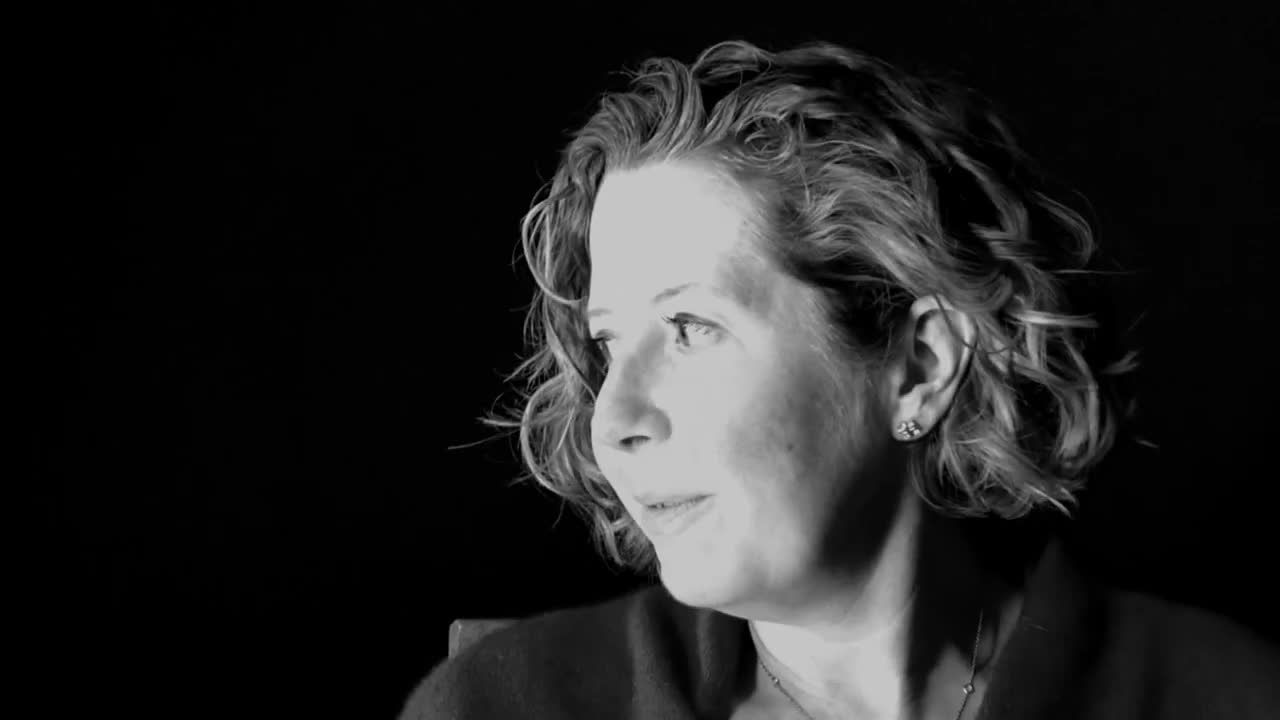
Jennifer Garvey Berger
Cover Up Perfection And See The Cracks Later
Spoken in English. Their words, as they said them.
I wonder how we would love ourselves and each other differently if we had a different idea about imperfection, humanness, wholeness, I wonder.
So much of what it seems unlocking or unleashing for the folks I work with is to put some of that perfection thing down, which is kind of a funny profession to be in to help people be comfortable with less striving towards perfection in some way. But it does seem to make so many more things possible. It seems to take a lot of the energy that's tied up in polishing, hiding the bad bits under the carpet.
Now let's just spend that energy in relationships and other things we care about, production of whatever art or science we find compelling.
It's a funny little poison perfection.
There's something about living in a in an old in an old place.
Somehow over enough years, imperfection becomes charming. You know, the roughness of the wood beams.
The stone walls.
That they just didn't cover because this building wasn't deemed worthy of covering these stone walls. This was a stable.
Yeah. In the in the other house, they cover the beams, they cover the walls, and then the cracks show in the plaster. In a way, they don't show here.
The thing about perfection is it's it's awfully hard to maintain in a building or speech or an outfit of relationship and identity.
Seems a very human construct, and at the same time undoes humanity in an interesting way.
I had the, I spent the locked down times of COVID in London. And in London, and the part where I live, it's very orderly. You know, the the bricks are orderly and the iron fences are orderly and the streets are orderly, and the parks are orderly, and the grass behaves, and the trees behave, and, the the tulips stay in the tulip place and the daffodils are in the daffodil place. You know, like everything is very orderly. And I feel a kind of energy in my own body when I'm in those kinds of settings that I get I feel it. I get more acquisitive. I I want a shiny thing or a nicer jacket or new shoes or you know, I suddenly want things. And, and it bothers me that my teeth are so crooked and, that my hair can be very wild. You know, all these things suddenly bother me. And then I come to a place like this and I cannot remember what that felt like. Like I can recount it to you because I had that feeling and I remember thinking, Wow, this is a really strong feeling. But I actually can't find it in me. Everything's crooked. Why would my teeth be different than everything?
And you know, what would I do with new shoes here? I only wear theI wear my oldest pair of shoes around because in the summer it's dusty and I'm barefoot and in the winter it's muddy and I'mI wear old boots. And and I think you're right, that living in the in the countryside is, it's just very good for my body.
And living in these old spaces that we're here way before us. And odds are good they'll be here way after us.
People are often afraid when I talk about bringing whole humans back to work. I watch people kind of get nervous and shuffle around in their chairs because they're thinking they're pieces of humans that are not that nice. You know, there's grumpiness in the morning or irrationality or ego or whatever it is.
It's just a different just a different thing. This quest for the way one ought to be at work. Bring these things but not those things. Think in these ways but not those ways. Feel in these acceptable ways but don't have those unacceptable feelings.
Slicing and dicing of what ought to happen.
It's a funny artifice.
An awful lot of good stuff gets left on the on the cutting room floor.
One of our very early clients, was a complete perfectionist.
And everything needed to be every slide needed to be beautiful. Every word needed to be flawless. You know, every sentence. And we were trying to do something brand new. And we knew we just simply could not meet that standard with something that was unfolding and emergent. We couldn't. And we knew that her standard was not going to change. And so we had all these meetings. What will we do? These two things are impossible together.
And so we decided we would have no slides. We would have no workbooks, no written material, no things to perfect. And we would create artifacts together with the group. And that then we would take those messy artifacts and distribute them because they were what the groom had made. And you can't complain about that because it's just the thing that happened in the room. And it completely freaked out everybody in the room because they were used to sitting back and having these things critiquing them if they weren't perfect or, you know, they were engaged in that whole enterprise. And when we stopped engaging in that enterprise, we had really good conversations.
And we even had great conversations about not engaging in the enterprise, about the discomfort people were feeling.
That quest for perfection, as it pushed against innovation, just created, an entirely new path. That if she had had lower standards that we could have met, we would not have been so innovative together. We would have had kind of messy slides as opposed to just having a different way of being together. You know, which now, whatever, fifteen years later sounds like coming into chairs in a circle and no materials seems like a a thing. But then it was really surprising for the people who came into the room.
Really surprising also for the the hotel staff could not understand that we didn't want a projector or screen in the room the way their rooms were oriented.
So there's also something fun about this quest and about holding it and innovation at the same time.